Why am I so tired in the afternoon?
Some of that dip is ordinary human rhythm, and some of it is what the morning cost you. But the tiredness itself is not a verdict that your day is finished. For years I read it that way, and I would reach for sugar or another coffee, and the afternoon stayed gray either way. What actually turns it over, for me and for a surprising amount of the research, is not rest and not sugar. It's one minute of moving hard enough to go breathless. That sounds backward when you can barely keep your eyes open. It is also the fastest door back into your own energy that I have found.
The two o'clock moment
There is a moment most afternoons, somewhere around two o'clock, when the light goes out of me.
My eyes get heavy. My thoughts turn to fog. My body wants sugar, or another coffee, or just to lie down and give the rest of the day away.
For years I treated that moment as a verdict. My body was tired, so the day was over.
I would reach for something sweet, or push through on fumes, and either way the afternoon stayed gray.
If you know that exact moment, and you have been calling it proof that you are wearing out, me too. I called it that for a long time.
The number we were all chasing was invented to sell a gadget
Before the useful part, one thing I learned that reorganized how I think about all of this.
The 10,000 steps we have all been failing to reach was never a medical finding. It came from a Japanese company called Yamasa Tokei Keiki, which in 1965 released a pedometer named the Manpo-kei. The name translates to "ten-thousand step-meter."
That's it. That's where the number came from.
Wait, what?
The Harvard epidemiologist I-Min Lee, who has spent years studying steps and health, put it plainly. It was a made-up number, in the sense that ten thousand sounds good and is easy to remember.
Her own 2019 research on older women found the benefit rising well below that, with something like 7,500 steps as the sweet spot. That is observational work, so it tells us what was linked to longer life rather than proving that steps alone did it. Still. We built a whole sense of not-enough around a marketing name.
So much of what we call aging is like that. A default we inherited and never questioned, a forecast we organized our lives around, certain it was the truth about us. If you want the longer version of that idea, it lives in what the aging default actually is.
What researchers mean by an exercise snack
The part that changed what I actually do at two o'clock is something researchers call an exercise snack.
Not an hour at the gym. Not changing your clothes. Bursts of moving hard, five minutes or less, scattered through an ordinary day. Climbing the stairs fast. A minute of squats in your kitchen. Chasing the dog around the yard.
A systematic review published in the British Journal of Sports Medicine in October 2025 looked at what these small bursts actually do. Done at least twice a day, over four to twelve weeks, they improved cardiorespiratory fitness, with moderate certainty of evidence.
I want to be exact about the rest of it, because I would rather you trust me than be impressed by me. The same review found no significant effect on leg strength, on muscular endurance in older adults, on body composition, on blood pressure, or on blood fats. The researchers also note that there are still only a small number of studies with small samples.
So this is not a miracle, and it will not replace strength training or a walk you love.
What it will do, apparently, is make your heart and lungs measurably better at their work, one minute at a time, without you ever changing your shoes.
The number that stayed with me from that review was a different one. People stuck with it. Adherence was ninety-one percent. Almost nobody quits a thing that takes sixty seconds.
What it felt like on my hill
I heard about this from Dr. Rhonda Patrick on Mel Robbins' podcast, and I tried it on the hill right outside my front door.
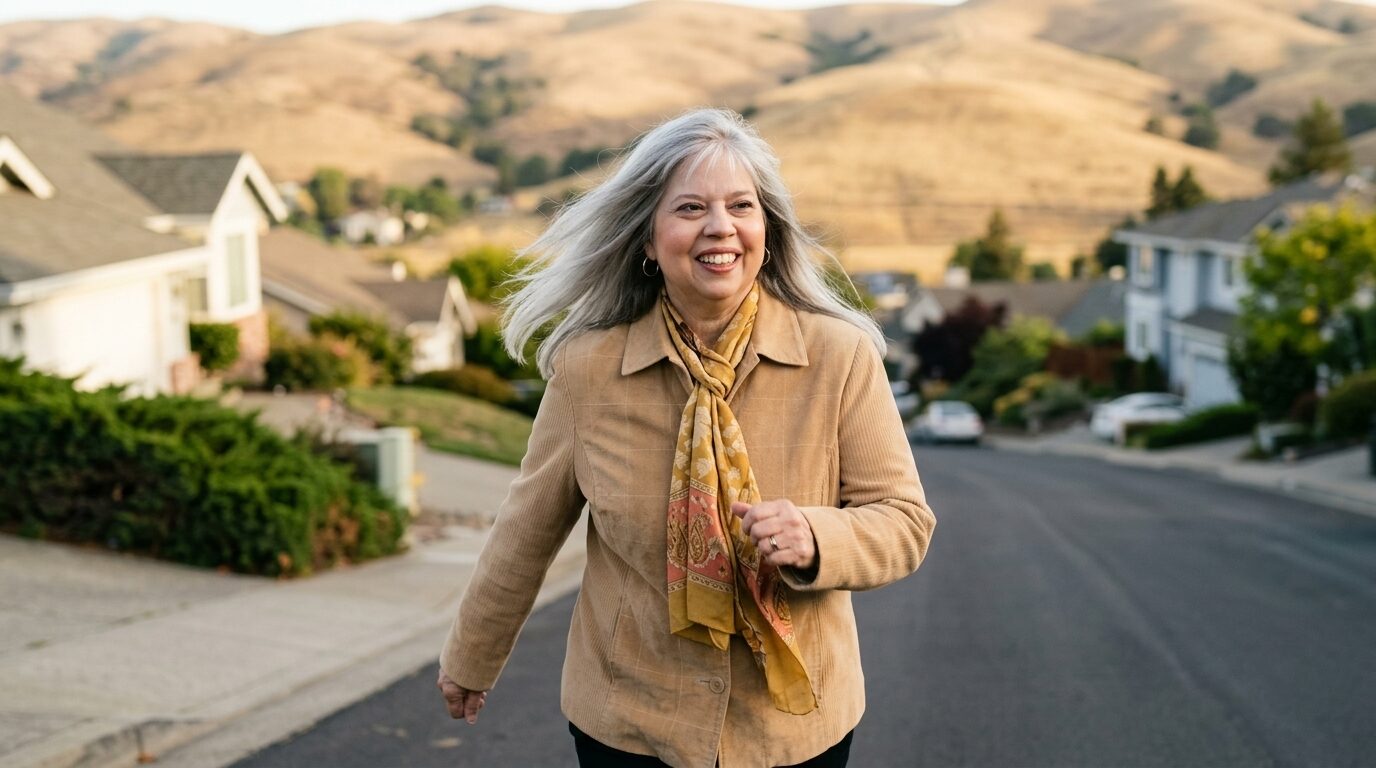
I walked up it again this morning. By the top my calves were burning and I was breathless, the breeze blowing my hair back.
I did not go full out the whole way, and I did not force it. I pushed to breathless, then kept climbing a little easier. I made sure not to hurt myself.
It worked. I felt the boost.
It took a while to come back to normal afterward, longer than I expected. But the big thing is that it was doable. My body liked it.
The part I did not expect
This next part is my own experience, not something I can point to a study for, so take it as one woman's report.
When I do one hard minute on purpose and I do not quit, something quietly generous happens afterward.
Later that day, when something small and lovely turns up, a friend's face, warm light through a window, a child laughing in the other room, I feel it more. Deeper, and for longer.
The hard minute does not seem to only cost me. It tunes me. It makes me more able to receive the sweetness that was there the whole time.
I have no mechanism to offer you for that. I only know it keeps happening.
Why moving helps when you feel too tired to move
This lands right where I keep living.
A bad mood is weather, not a verdict, and you cannot bully your way back to feeling good. This is the gentler other half of that.
When the gray afternoon comes, I have one more door now. Instead of reaching for the fridge, or bracing against the heaviness, I can move hard for a minute and let my body turn the whole state over.
Not to punish it. To wake it up.
One honest note. If your tiredness is not really an afternoon dip, if it is there when you wake and rest never touches it, that is a different conversation and it deserves its own. I wrote about that one in why am I so tired all the time.
Try it, right now
If there is a heaviness in you as you read this, here is something you can do before you finish your coffee.
Stand up.
Move hard enough for one minute to get breathless, however your body does that today. Squats, stairs, marching in place with your knees high.
You do not have to go full out, and you do not have to last the whole minute at full effort. Push to breathless, then keep going a little easier.
When you are done, notice what moved.
You do not have to become an athlete. You do not have to earn anything. You are opening a door your body has been waiting for you to open.
Your energy is not gone. It is not even really hidden. It is waiting one honest minute away, closer than the refrigerator, closer than the next cup of coffee.
Stand up when your light feels dim today. Give your body its minute. Then let it show you how much aliveness it was holding for you the whole time.
Frequently asked questions
Why do I get so tired around 2 p.m.?
Part of it is ordinary human rhythm, and part of it is what your morning cost you. The dip itself is normal. What makes it worse is treating it as a verdict and reaching for sugar or another coffee, which tends to buy you twenty minutes and hand back a heavier hour.
Does one minute of exercise actually do anything?
For your heart and lungs, apparently yes. A 2025 review in the British Journal of Sports Medicine found that short bursts of five minutes or less, done at least twice a day, improved cardiorespiratory fitness. The same review found no significant change in strength, body composition, blood pressure, or blood fats, so it isn't a replacement for everything else.
Is it bad to take an afternoon nap?
Not at all, if you have the time and your body genuinely wants sleep. The trouble is that most of us don't have the time, so the wanting turns into sugar or fumes instead. The one-minute version is for the afternoons when lying down isn't on offer.
Do I really need 10,000 steps a day?
No. That number came from the brand name of a 1965 Japanese pedometer, not from research. Studies of older women have found the benefit rising well below it, in the range of 7,500 steps, and a good deal of benefit appears far earlier than that.
A weekly letter for the woman you're still becoming
Every week I write to women coming back to life in their third act, with real stories, the quiet science of aliveness, and faith and honesty held in the same hand. If this reached you, come join me. I'd love to keep walking with you.
Join the weekly letterYour energy is not gone. It is waiting one honest minute away, closer than the refrigerator and closer than the next cup of coffee.
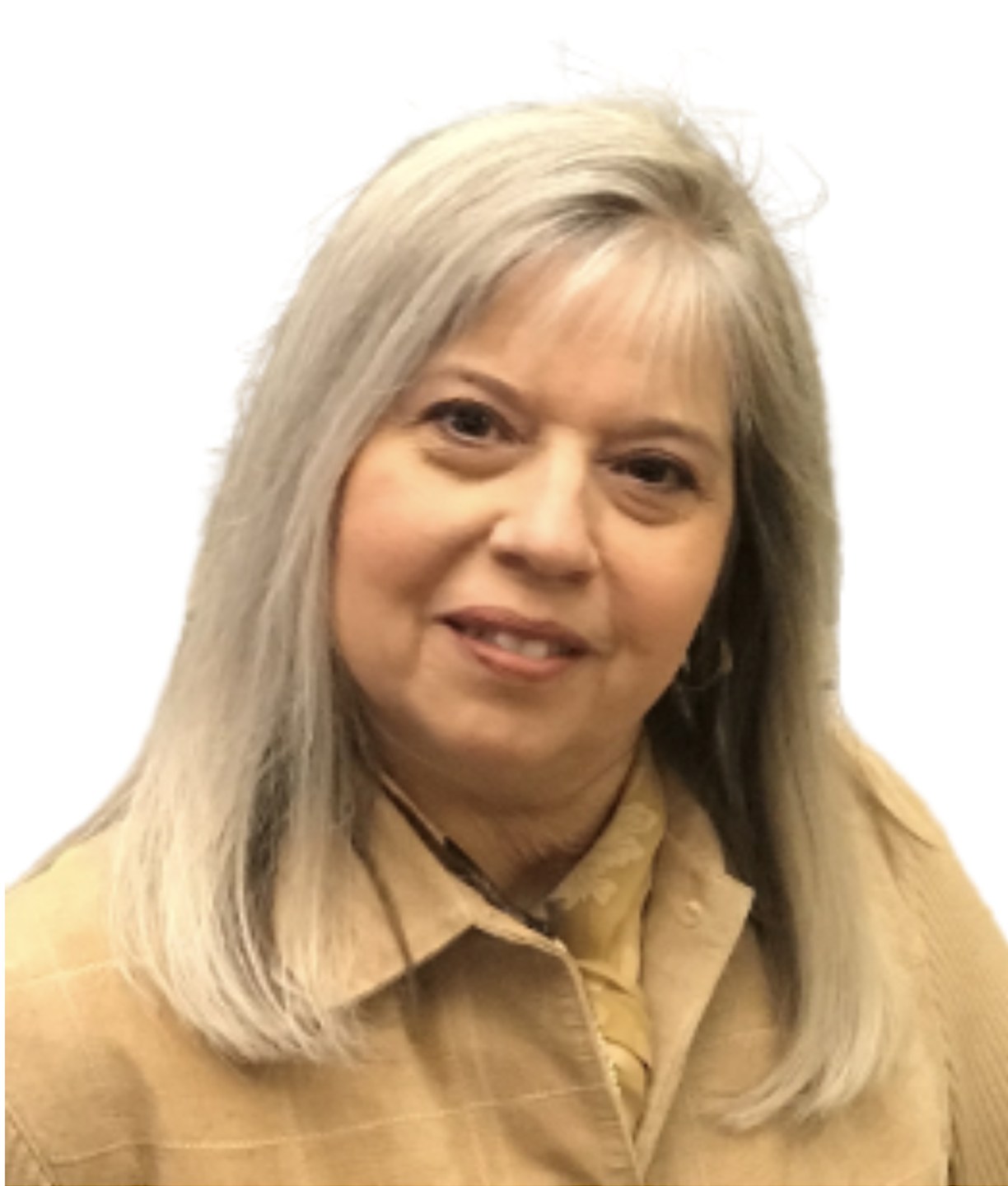
Coach and author for women in the third act of life, holding faith and consciousness in the same hand. Master's in Social Work, degree in Psychology, HeartMath trained, and nearly five decades engaged with the science of change. She writes about outgrowing the aging default and coming home to a wholeness you already belong to. Meet Kristin